
Imagine waking up at the ideal time in the morning, having your playlist select songs that fit your mood, and your phone recognizing you based only on your face. That’s artificial intelligence (AI)—not just science fiction magic, but a smart assistant making life easier! AI is used in everything from Netflix recommendations to life-saving medical procedures. Wondering? Without the need for technical jargon, I’m here to take you on a straightforward, narrative journey through the definition of artificial intelligence (AI), its amazing history from the 1950s to the present, and how it’s influencing your future.
How does artificial intelligence already improve your day? Leave a comment below!
Artificial Intelligence: What is it? Basic Definition and Illustrations

What is artificial intelligence, then? Simply put, artificial intelligence is the capacity of software or robots to carry out operations that ordinarily call for human intelligence. This covers skills including language comprehension, visual recognition, problem-solving, and decision-making.
Let’s simplify this even further: AI is used when a machine can simulate human thought, learning, or behavior.
Imagine having an extremely intelligent assistant who solves issues, learns from mistakes, and makes judgments more quickly than you can drink your coffee. Artificial Intelligence (AI) is technology that simulates human thought processes, such as identifying your face to unlock your phone or assisting Google Maps in avoiding traffic.
AI appears in your life in the following ways:
- Amazon offers the ideal pair of pants.
- Netflix suggests shows you’ll binge-watch.
- Your phone’s Face ID recognizes you in a split second.
Have you ever wondered how your phone recognizes your face to unlock it? To better understand this, let’s examine a real-world case.
On your phone, you might have utilized Face ID. It’s a straightforward yet effective AI demonstration. Face ID unlocks your phone instantaneously by identifying facial characteristics. It’s not just software; it’s computer vision driven by AI that can identify faces just as well as people. This technology improves your experience and protects your phone. Wouldn’t it be intriguing if AI could identify you exactly like your friends?
AI feels magical because AI learns to make life easier, like a friend who always understands what you need; it feels amazing. Prepare to discover where it all began!
History of AI: From Greek Legends until 2025
A Short and Interesting History of AI. Let’s go back in time to ancient Greece.
People heard stories about Talos, a huge bronze statue that could think and guard the island of Crete.
Well, that was only a myth. But the concept? A machine that could “think” like a person? That seed was planted a long time ago.
Let’s go ahead to the 1950s.
At last, scientists took it seriously. They started asking brave questions like, “Can machines really think?” a well-known challenge posed by Alan Turing.
The dream of human-like thinking was alive and well in those days, even if computers took up entire rooms and could hardly perform mathematical operations.
Since its early days, artificial intelligence (AI) has evolved from rule-following calculators to powerful smart devices that we currently carry around in our pockets. That’s how far we’ve come. from a bicycle to a rocket ship.
Are you curious about a moment that altered the course of AI history? Here’s a story that shows just how far AI has come.
Brief Narrative: The Chess Triumph of IBM Deep Blue (1997)
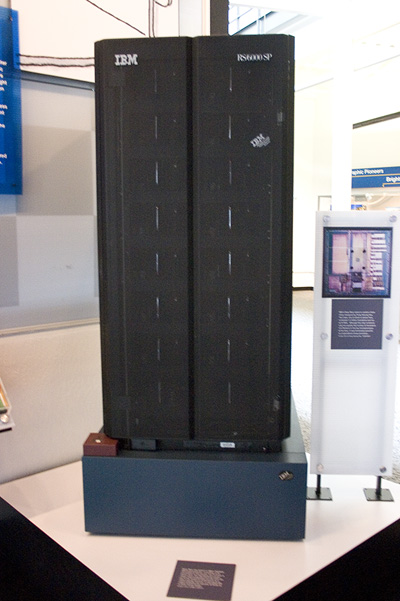
The year 1997 was an important turning point in the evolution of artificial intelligence. Imagine two renowned players engaged in combat on a silent chessboard. Garry Kasparov, the world champion, is on one side. on the other hand, IBM’s Deep Blue is a machine full of potential.
Then history was created. Deep Blue won. For the first time, a world chess champion was defeated by a machine.
IBM’s Deep Blue computer not only defeated global chess champion Garry Kasparov, but it also showed the world that machines can make judgments by understanding complex brain processes. This victory was both a competition and an example of what AI can do, and it still affects many parts of our lives today.
AI’s amazing adventure began with the chess victory. Let’s travel back in time to see the major events that influenced AI:

- The Idea—Alan Turing posed the question, “Can machines think?” in 1950. His Turing Test put computers to the test by simulating people.
- 1956: The Birth—The field of artificial intelligence was founded when John McCarthy coined the term during the Dartmouth Conference.
- 1970-1974 – Expert Systems: Using rules, Stanford’s MYCIN, led by Edward Shortliffe, assisted physicians in diagnosing infections.
- Late 1980s (starting 1988) – Neural Networks—Yann LeCun developed LeNet convolutional neural networks at Bell Labs for image recognition.
- 1997: Chess Triumph—IBM’s Deep Blue, led by Feng-Hsiung Hsu, defeated chess champ Garry Kasparov
- 2011: Voice Assistants—Apple’s Siri brought AI to your pocket, chatting like a friend.
- 2012: Deep Learning Boom—Geoffrey Hinton’s AlexNet revolutionized image recognition, sparking modern AI.
- 2016: AlphaGo Victory—Demis Hassabis’ DeepMind created AlphaGo, defeating Go champion Lee Sedol.
- 2020: GPT-3 Launch—Sam Altman’s OpenAI released GPT-3, enabling human-like text generation.
- 2022: ChatGPT Surge – OpenAI’s ChatGPT (based on ChatGPT 3.5), under Altman, went viral, making AI a household name.
- 2023: AI Assistants Evolve – Sundar Pichai launched Google’s Bard, while Satya Nadella introduced Microsoft’s Copilot for Office 365.
- 2024: AlphaFold 3—DeepMind released AlphaFold 3, expanding capabilities to predict protein complexes, DNA/RNA, etc.
- 2025: AI Goes Mainstream – Latest launches include Google’s Gemma 3 and scaled Gemini 2.5, ambitious user targets, while Microsoft launched Phi-4-mini-flash-reasoning and advanced agentic AI for tasks like coding.
The journey of AI, from myths to your phone, is epic. However, who was responsible for it? Next, let’s meet them!
Which milestone in AI is your favorite? Leave a remark with it!
AI Pioneers: The Mind Behind the Machines

Who made the aspirations of AI a reality? These pioneers cleared the path:
- Alan Turing (1950): His Turing Test set the stage for machines to act human-like.
- John McCarthy (1956): The “father of AI,” he named the field and sparked its growth.
- Marvin Minsky (1960s): Co-founded MIT’s AI Lab, teaching machines to “think.”
- Geoffrey Hinton (2010s): His deep learning work made AI ace image and speech recognition.
- Yann LeCun & Yoshua Bengio: With Hinton, they built neural networks powering modern AI.
- Yoshua Bengio (1990s–2010s): Advanced deep learning, enabling modern AI.
- Geoffrey Hinton (1980s–2012): The “Godfather of AI” revolutionized neural networks with AlexNet.
- Demis Hassabis (2010s–2024): Led DeepMind to AlphaGo and AlphaFold breakthroughs.
- Jensen Huang (2020–2023): Powered AI’s rise with Nvidia’s GPUs, fueling models like ChatGPT.
- Sam Altman (2020–2022): Drove OpenAI’s GPT-3 and ChatGPT, making AI accessible.
- Sundar Pichai (2023–2025): Launched Bard, Gemini 2.0, and Gemma 3, scaling Google’s AI to millions.
- Satya Nadella (2023–2025): Integrated Copilot into Microsoft 365 and launched Phi-4 in 2025, pushing agentic AI.
These pioneers make AI your daily assistant, much like explorers mapping out a new planet. Have you ever wondered how their inventions operate? Let’s take a look behind the scenes!
How Does AI Work? The Core of the Magic

How does Artificial Intelligence perform its remarkable feats? At its heart, AI is a system that learns and improves by processing vast amounts of information. Here’s how it works, step by step:
First, data collection gathers massive datasets—like thousands of X-rays for medical AI.
Next, pattern recognition allows AI to identify trends, such as spotting abnormalities in those X-rays.
Through learning, AI refines its skills by analysing more data, getting better with each example.
Then, decision-making enables AI to act, like recommending a diagnosis to a doctor.
Finally, self-improvement ensures AI fine-tunes itself, becoming more accurate over time.
In Simple Terms, AI works by collecting data, finding Patterns, making informed decisions, learning from its mistakes, and improving over time —just like people do, but much faster. This process is called machine learning. This powers tools like navigation apps that find the fastest route by analysing traffic data or medical systems that detect diseases with precision. Scientists design algorithms—sets of rules—to guide this learning, creating models that act like digital brains. It’s not magic—it’s data, rules, and practice working together!
Curious about how AI Works? Here’s an example of AI making a huge impact in healthcare.
Mini Story: IBM Watson Health in Medical Diagnosis
A great example of AI is IBM Watson Health, which helps doctors analyze the medical data of patients. This AI system, after reading so many research papers and medical records, has suggested such treatment options that make the diagnosis faster and more accurate. Just think, how many lives are being saved with the help of AI! This is not just theory, but the reality of how AI technology is improving our health.
Quite remarkable, isn’t it? AI assists us in ways we aren’t always aware of, much like a superhero sidekick. But how can you benefit from this technology? Next, let’s examine its varieties!
Types of AI: A Quick Peek
Now that we understand what artificial intelligence is, let’s divide it into three categories: Super AI, General AI, and Narrow AI.
- Narrow AI: This is the type of AI we use every day. Narrow AI is designed to perform a specific task and does it well. It can’t do anything outside of its training. This narrow AI is also known as Weak AI. it Masters one task, like Siri answering questions or spam filters catching junk emails.
- General AI: General AI is the next level. This type of AI would be able to perform any intellectual task that a human can do. It would not only understand and learn, but also apply logic, reason, and even creativity across a wide range of tasks. This Generalized AI is also known as Strong AI. This aims to think like humans across tasks—not here yet, but it’s a big goal!
- Super AI: This is known as Conscious AI, Sci-fi territory, where AI is smarter than humans in every way. This AI with human-level consciousness. Just a dream for now! These types show AI’s range, from your phone to future possibilities. Curious about AI’s superpowers? Let’s see why it’s a game-changer!
This was just a quick overview of the types of AI. If you’d like to explore Narrow AI, General AI, and Superintelligence in detail with real-world examples, check out my next post: Understanding Types of AI: From Your Phone to Sci-Fi Dreams.
Why AI is a Game Changer: Benefits and Applications
Why’s AI such a big deal? It’s like a superpower, making life faster and smarter. Its ability to solve complex problems is revolutionizing industries and everyday life.
Benefits:
- Saves time: Automates tasks like sorting emails or scheduling meetings.
- Super accurate: Spots patterns humans miss, like tiny cracks in a bridge.
- Helps everyone: Voice-to-text tools aid people with disabilities.
Applications:
Business: Amazon predicts what you’ll buy next. AI is transforming how we live, work, and play. But where’s it headed next? Let’s peek into the future!
Healthcare: AI catches cancer early, saving lives.
Entertainment: Netflix picks your next binge-worthy show.
Education: Apps like Duolingo tailor lessons to you.
The Future of AI: Top Trends
AI is poised to redefine our world, from daily routines to global industries. Its rapid advancements promise a future of smarter, more connected living.
- Smarter daily life: AI-powered fridges ordering groceries or apps planning your day.
- Workplace boost: AI-driven performance analytics may influence career trajectories and workforce management.
- Ethical AI: Efforts to make AI fair, like reducing bias in hiring tools.
- AI + tech: Robots delivering food or AI enhancing VR games for epic adventures.
By 2030, AI could be your personal life coach. Exciting, right? But is there a catch? Let’s explore AI’s challenges next!
The Dark Side of AI: Challanges & Concerns
AI’s not perfect—it has flaws like any hero. Its power raises ethical and practical concerns that need careful attention.
- Job shifts: AI might replace roles like drivers, but it’s creating new jobs too.
- Privacy worries: Apps tracking your likes and searches can feel creepy.
- Bias issues: AI can make unfair decisions if trained on bad data, like in hiring.
- Misuse risks: Deepfakes could trick people if AI is misused. Experts are tackling these issues to keep AI safe and fair. Ready to try AI yourself? Let’s see how you can start!
Getting Started with AI
The world is changing, but that doesn’t mean we should fear it. We can prepare by learning new skills and adapting to the new environment. Want to explore AI? It’s easier than you think!
- Try free tools: Play with Canva’s AI for designs or ChatGPT for fun chats.
- Learn basics: Watch YouTube tutorials or follow AI blogs (like mine!).
- Focus on human Strengths: Skills like creativity, emotional intelligence, leadership & critical thinking are hard for AI to replicate.
- Stay curious: Check X for AI news to stay updated. AI are like friendly tools waiting for you. Start small, and you’ll be amazed! The future’s yours to shape with AI!
Wrapping Up
Artificial intelligence is like clever friends—helping daily, growing smarter, and shaping a wild future. From the 1950s dreams to 2025’s breakthroughs, it’s a story of visionaries and tech making life better. But it’s not perfect, and we’re learning to use it wisely. This guide is your first step to understanding AI—no tech skills needed!
Yes, there are challenges associated with AI. But there are also endless possibilities. With curiosity, a growth mindset, and a willingness to learn, we can not only adapt to change but thrive in it. So, let’s stop fearing what’s coming. Instead, let’s start exploring, learning, and making the most of the amazing tools AI brings to our world.
Like what you read? This is just the Start.
I’ll be sharing more blogs that break down complex AI topics in easy, relatable ways — from how AI is used in education and jobs to tools you can use daily.
What part of AI do you find most exciting or confusing? Let me know in the comments — your questions might inspire the next post!
“Want to dive deeper? Don’t miss my detailed blog on the Types of AI, where I explain each type with examples, future potential, and challenges. Read more about Type of AI.”

